Where Healing Lives: Integrating the Yothera Method and Brainspotting
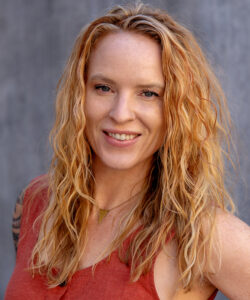
by Jessica Maitri
My story is not unique, and is one that many therapists experience at some point in their profession.
That story is one that includes the disillusion of clinical talk-therapy diagnostic models, and gravitating towards the path or more embodied, holistic healing approaches. My story includes the development of my own somatic training modality called “The Yothera Method” (the blending of yoga and therapy) which was born not from psychology theory alone, but from years of listening to my own body. I’ve deeply listened to clients, to their bodies, and to the quiet intelligence beneath our words.
Again and again, I saw how insight and talk-based approaches could bring awareness, yet something deeper often remained just out of reach. Clients understood their patterns, named their wounds, and still felt stuck in familiar emotional loops.
My background in yoga therapy, somatic practice, and breathwork kept pointing me to one essential truth: the body already holds the map. When people slow down enough to sense what is happening internally, such as subtle shifts in breath, sensation, and impulse, so that healing begins to unfold organically. The Yothera Method emerged as a way to guide people into this embodied relationship with themselves, where intuition and physiology work together.
When I encountered Brainspotting years later, I immediately recognized a kindred approach. Here was a modality grounded in neuroscience that honored the body’s innate capacity to process and heal, without requiring everything to be explained cognitively. It felt like finding a missing piece that enhanced the work I was already doing. Brainspotting offered a precise, brain-based pathway into deep processing, while Yothera provided the embodied framework to help clients stay present with what emerged. Together, they form a powerful, integrated approach to healing.
Healing Beyond Words
Brainspotting is a brain–body method that uses eye position to access subcortical regions of the brain where trauma, emotional pain, and survival responses are stored. Rather than relying only on narrative, it allows unresolved experiences to be processed at a neurological level, helping the brain and body complete cycles that were once interrupted by overwhelm.
The Yothera Method shares this bottom-up orientation. Rooted in somatic awareness, therapeutic presence, and intuitive tracking, it helps individuals build a conscious relationship with their internal landscape. Sensations, emotions, breath patterns, and subtle impulses become meaningful signals rather than background noise.
When these approaches come together, healing moves out of the realm of “figuring it out” and into the realm of feeling it through. Clients are not pushed to retell every detail of their past. Instead, they are supported in staying present with the body’s experience in the moment, allowing the nervous system to reorganize naturally. Old patterns loosen not through force, but through integration.
The Nervous System as a Gateway
Both Brainspotting and the Yothera Method work directly with the nervous system as a living, adaptive system shaped by experience and relationship.
In a Brainspotting session, a specific eye position helps access stored material while the practitioner offers steady, regulated presence. Activation rises and falls in waves, allowing the system to process what once felt overwhelming.
Yothera strengthens the client’s capacity to remain present with these internal waves. Through guided awareness and compassionate tracking, clients learn to notice sensations without immediately escaping or overriding them. This builds embodied resilience and the ability to stay with experience without becoming flooded or shut down.
As this capacity grows, the body shifts from feeling like a source of distress to a source of information. Sensations that once triggered fear begin to feel like signals. Emotions that once felt unbearable become workable. The nervous system develops greater flexibility and a deeper sense of internal safety.
From Survival to Self-Connection
A profound outcome of this integrated work is the movement from survival-based living toward authentic self-connection.
When survival responses dominate, life organizes around avoiding discomfort or threat. Overthinking, overworking, people-pleasing, or numbing are not flaws; they are intelligent strategies that once helped us cope. Over time, however, they can disconnect us from our deeper truth.
Brainspotting helps release the stored survival energy that keeps these patterns in place. The Yothera Method then supports clients in rebuilding trust with their internal signals. Gradually, people begin to sense what feels aligned and what does not.
Decisions become less about external pressure and more about internal congruence. Boundaries arise with greater clarity. There is a shift from “What should I do?” to “What feels true in my body?” This is not impulsivity; it is integration between thinking and embodied awareness.
The Power of Attuned Presence
Healing unfolds most deeply in the context of an attuned relationship.
Brainspotting emphasizes the practitioner’s regulated presence as a stabilizing anchor for the client’s nervous system. The therapist tracks subtle cues and supports pacing as material surfaces and resolves.
The Yothera Method similarly centers relational attunement. Practitioners listen with their whole awareness which includes listening to breath, posture, tone, and energetic shifts. This level of presence communicates safety beyond words and signals to the nervous system that it does not have to rush or defend.
Over time, clients internalize this experience of being met. They develop the ability to stay present with themselves in moments that once led to disconnection. Self-attunement becomes an inner resource they can carry into daily life.
A Path Toward Wholeness
Both Brainspotting and the Yothera Method are oriented toward wholeness. The goal is not to fix what is “wrong,” but to integrate parts of the self that had to be pushed aside in order to survive.
As stored trauma resolves and embodied awareness deepens, many people experience not only symptom relief but renewed vitality, meaning, and connection. Creativity may reawaken. Relationships often shift toward greater authenticity. There can be a quiet yet powerful sense of coming home to oneself.
By integrating neuroscience, somatics, and intuitive awareness, this combined approach honors both the biology of survival and the deeper intelligence that guides growth. It is a path where the body leads, healing unfolds organically, and transformation arises not from force, but from reconnection.